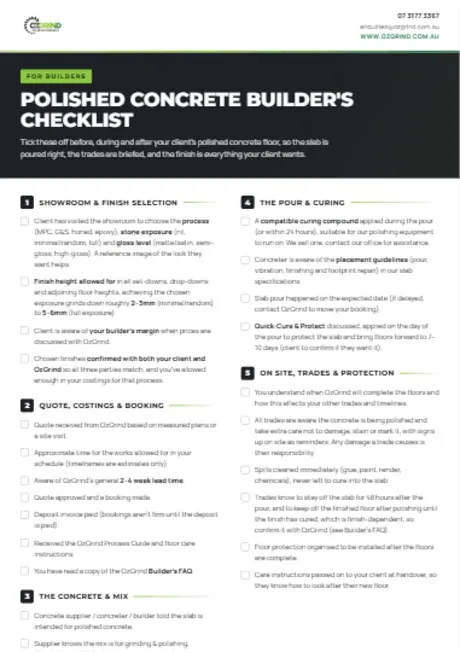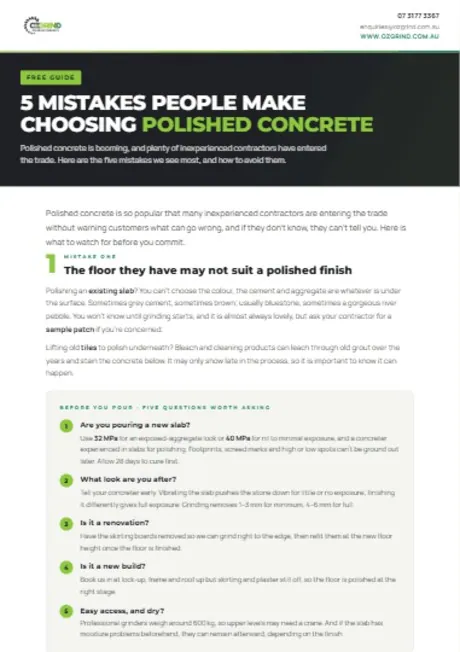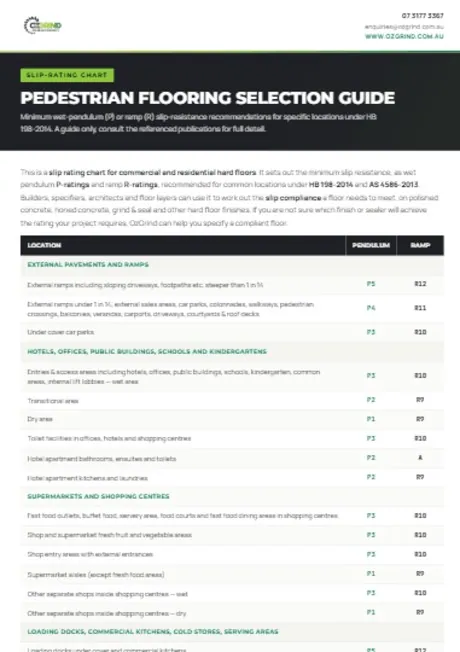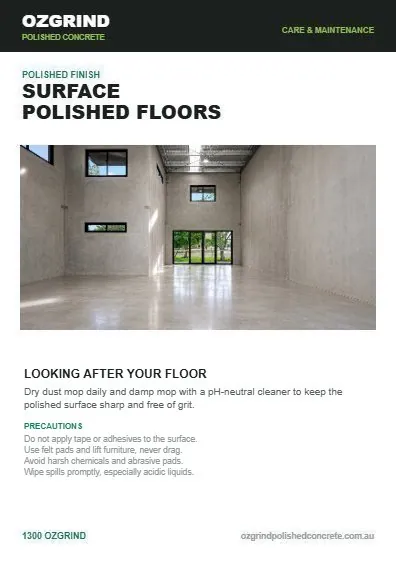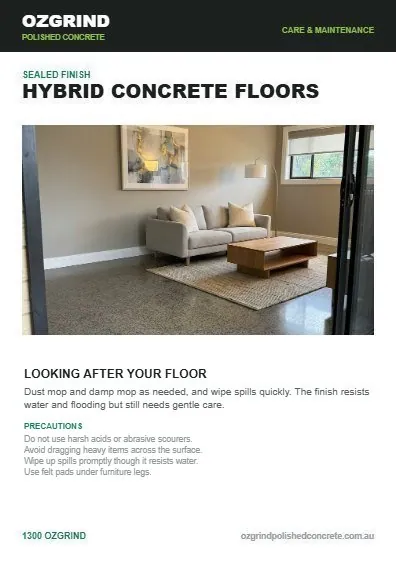
Everything you need before the slab is poured, through construction and at handover of a polished concrete floor. The same guides, checklists and care instructions we give our clients, concreters and project managers on every project.
Most polished concrete problems are not caused during polishing. They are set long before, in the mix, the slab finish, the curing, the protection and the construction sequence. Get those right and the floor looks after itself. The resources below are built to help you avoid delays, defects and expensive rectification.
You can avoid every one of these. Follow the checklists and guides below before your slab is poured and you sidestep the mix, curing, protection and sequencing mistakes that cause them. Two minutes now saves days of rectification later.
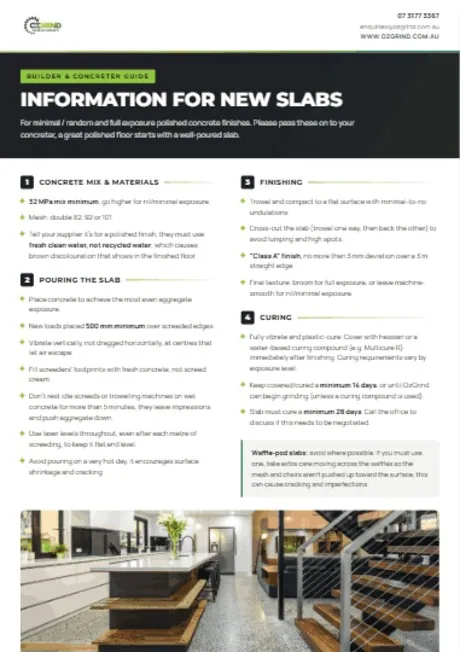
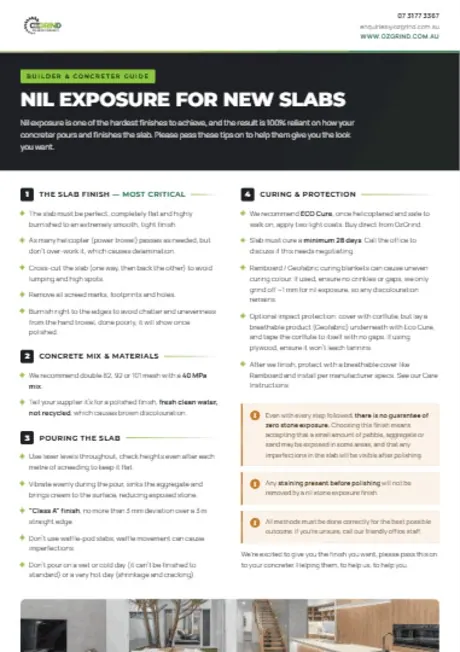
Get the Guides ↓Our most requested guides. Download, print and share with your concreter and site team.
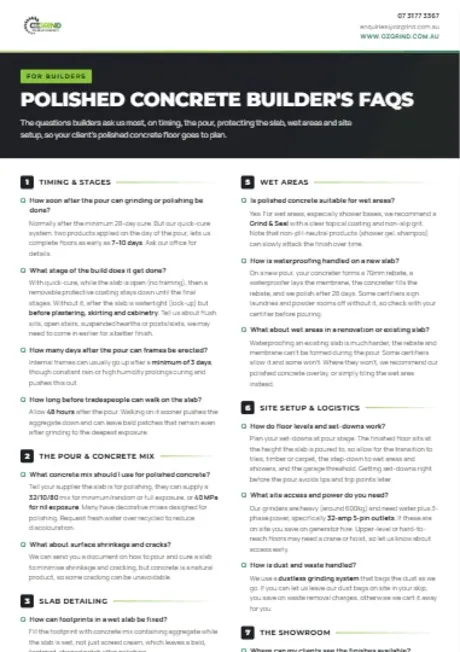
The questions builders ask us most, all answered in the guides above.
A polished concrete floor is the finished floor, not something covered later, so protecting the slab during construction is critical.
Before handover, make sure your client gets the correct care information. Each system has different maintenance requirements, curing times and cleaning recommendations. Send them the matching guide, or download the PDF.
Custom home, architect-designed residence, warehouse, retail tenancy or commercial development, involving your polished concrete contractor early usually means a better floor. We are happy to review plans, discuss slab requirements, recommend the right mix and explain aggregate exposure options before the slab is poured. A quick conversation at planning stage is the easiest way to avoid unnecessary cost later.
Polished, honed or epoxy, it is important to lock the exact finish down before the slab is poured. Point your client to the right finishes below, or send them into our Eagle Farm showroom to choose the exact look they want.














Standard concrete needs about 28 days to cure. If the program is tight, we can apply a quick-cure system on the day the slab is poured and start grinding in 7 to 10 days.
Either at open stage with a protective coating over the floor, or after lock-up once the building is watertight, before plaster, skirting and cabinetry go in.
32MPa with 10mm aggregate at 80mm slump (32/10/80) for minimum, random or full stone exposure, and 40MPa for nil exposure. Always fresh water, never recycled. Our new-slab guide sets it all out for your concreter.
It needs the right mix, a tight steel-trowel finish and careful curing. We supply a dedicated nil-exposure slab guide for your concreter to follow.
A polished floor is the finished floor. Use a breathable protection board taped to itself or the frames, never to the floor, plus a removable coating where needed.
Yes. We use grind and seal with a non-slip additive and set out the waterproofing sequence of rebate, membrane, then hone or polish after curing. Confirm the detail with your certifier.
No. Polishing runs across the whole floor in steps and needs full, clear access. Hand tools only reach within a few millimetres of edges, so we finish before handover, not after.
Often a cheaper grind and seal is quoted at a mechanically polished price. Inexperience shows up later as rectification the builder wears. Ask exactly which system and finish is included.
Everything your client should know before we arrive: booking windows, courtesy calls, payment, additional costs, what happens during the works, and after completion. Share it so the project runs smoothly from day one.
Our service disclaimers explain what to expect from a natural product like concrete, so your clients know the possible outcomes up front. Each one will be available here to read and download.
Tell us about your space and whether your slab is new or existing. We will come back within 48 hours with honest advice and a no-obligation quote.