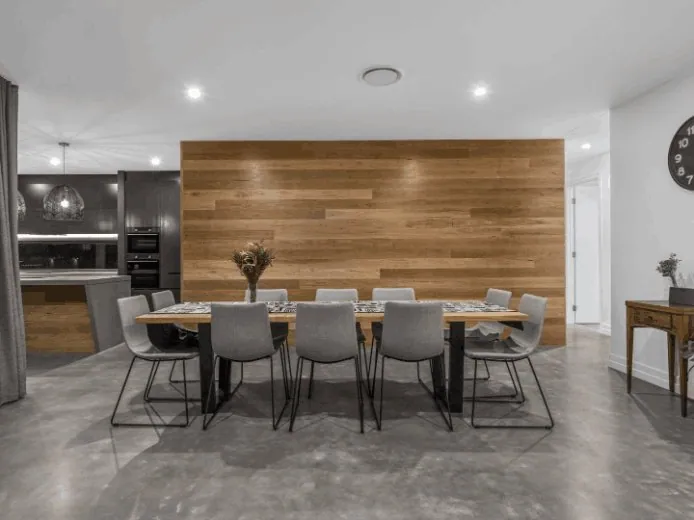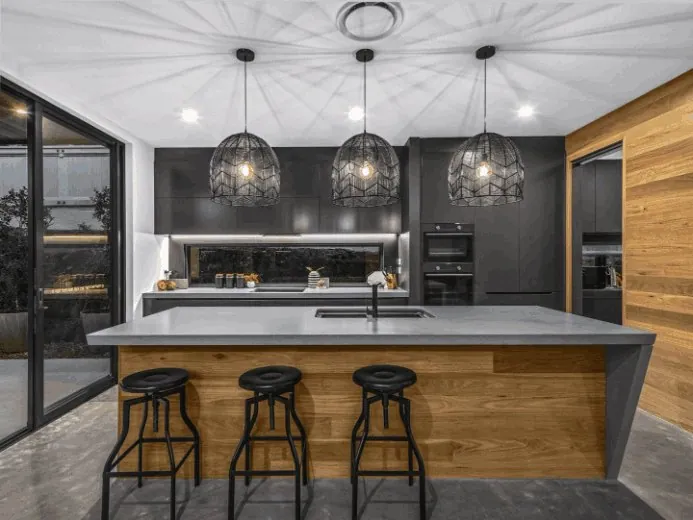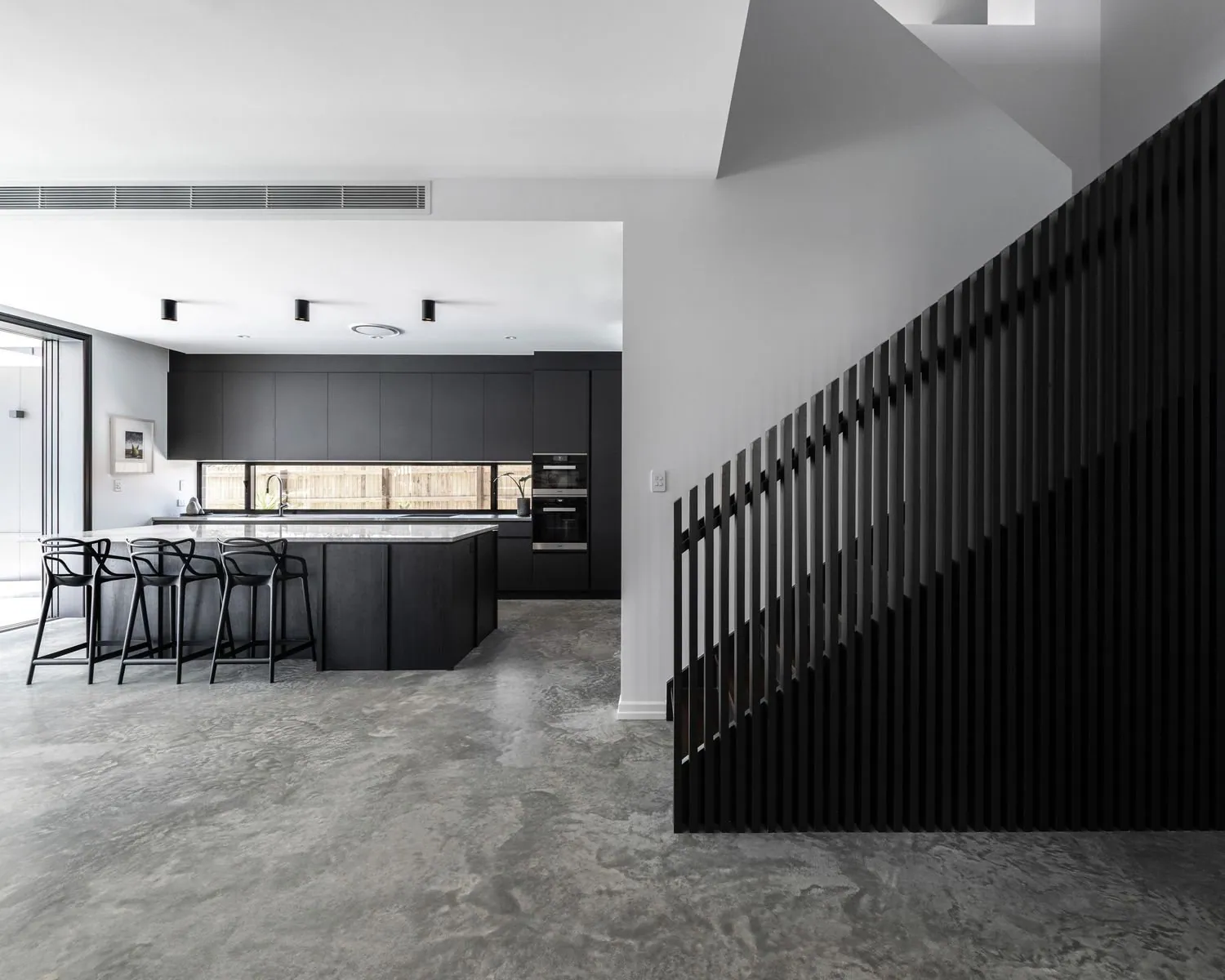
The floor many people call burnished or burnt concrete is often confused with a plain trowelled slab. Ours is different: an architectural finish where skilled concreters build real movement and tonal variation into the slab, then we lightly polish it for lasting durability, across Brisbane, the Gold Coast and the Sunshine Coast.













Burnished concrete is a slab finished to a sheen with a power trowel while the concrete is still curing. As the blades pass over the surface they close and tighten the cement paste, leaving a smooth, lightly reflective floor. It is a concreter's finish, created at the time of the pour rather than ground and polished afterwards.
Burnishing actually densifies and hardens the surface as the concrete cures, so a burnished floor is denser, tougher and better looking than a plain trowelled slab. It is a real step up from a standard finish. What it is not is a match for a mechanically polished or grind and seal floor, the finishes most homes and public commercial spaces rely on to last, because those grind, densify and refine the slab to a consistent, chosen result you can maintain for decades.
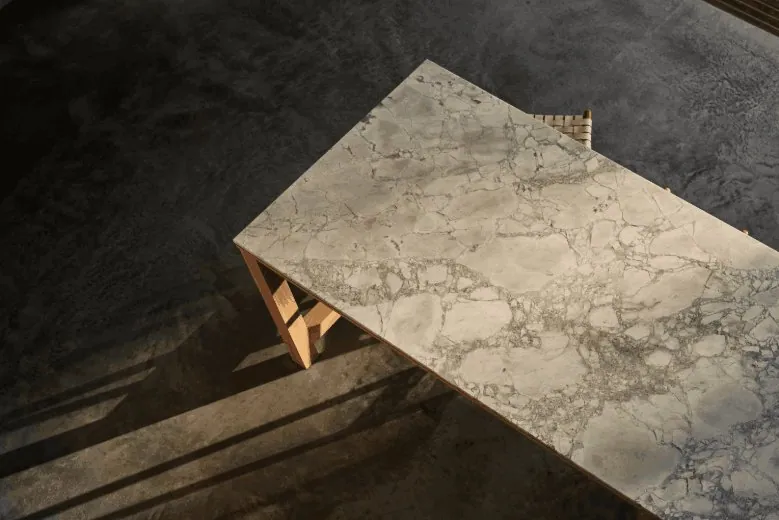
"Burnished concrete" means different things to different people, and the floor you picture may not be the floor you get. Here are the four finishes people group together, and where our architectural finish sits.
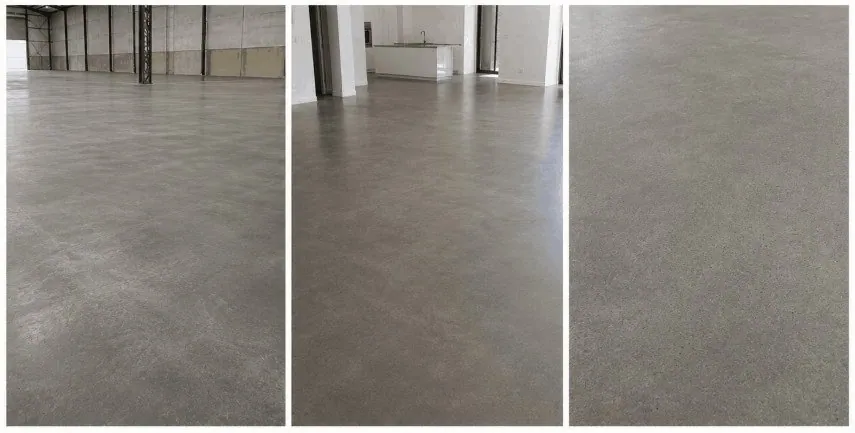
Not polished. Created entirely during the concrete pour by repeatedly power trowelling (helicopter finishing) the slab as it cures, which closes and hardens the top layer with no grinding.
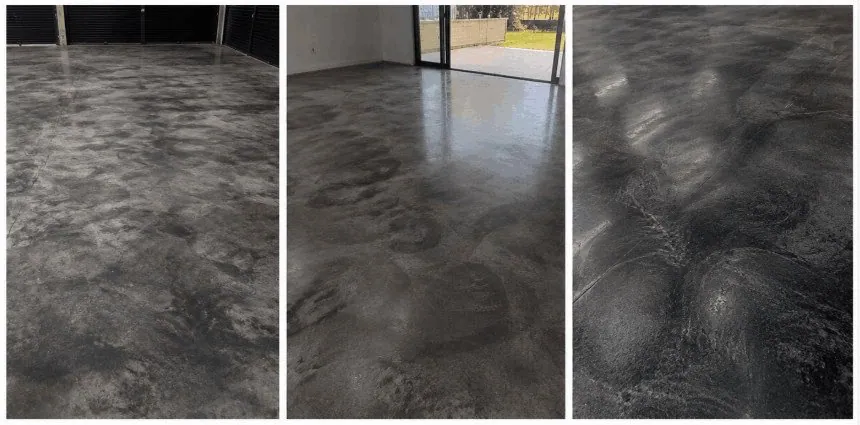
Not an official specification. An industry term for concrete that has been heavily or repeatedly power trowelled, creating darker tones and a denser surface, sometimes by accident, sometimes on purpose for a dramatic industrial look.
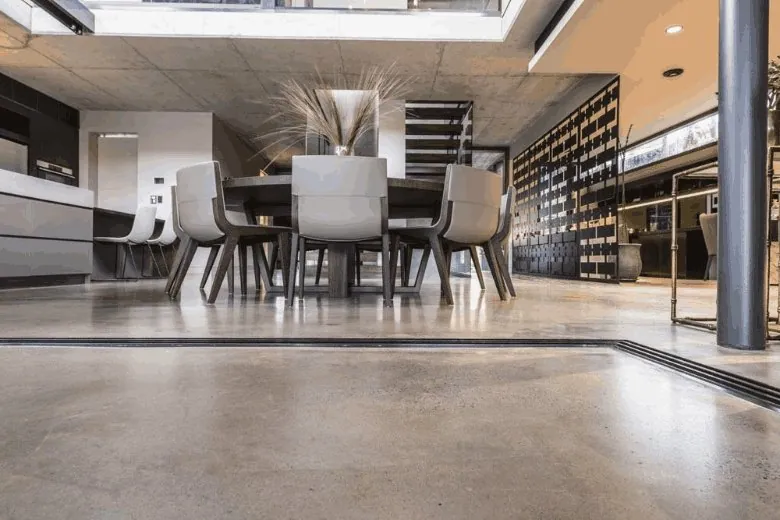
Completely different. The cured slab is mechanically ground with industrial diamond tooling, then densified and polished for a harder, more durable, stain-resistant surface. Shown here as a nil exposure floor, the closest MPC match to our architectural look.
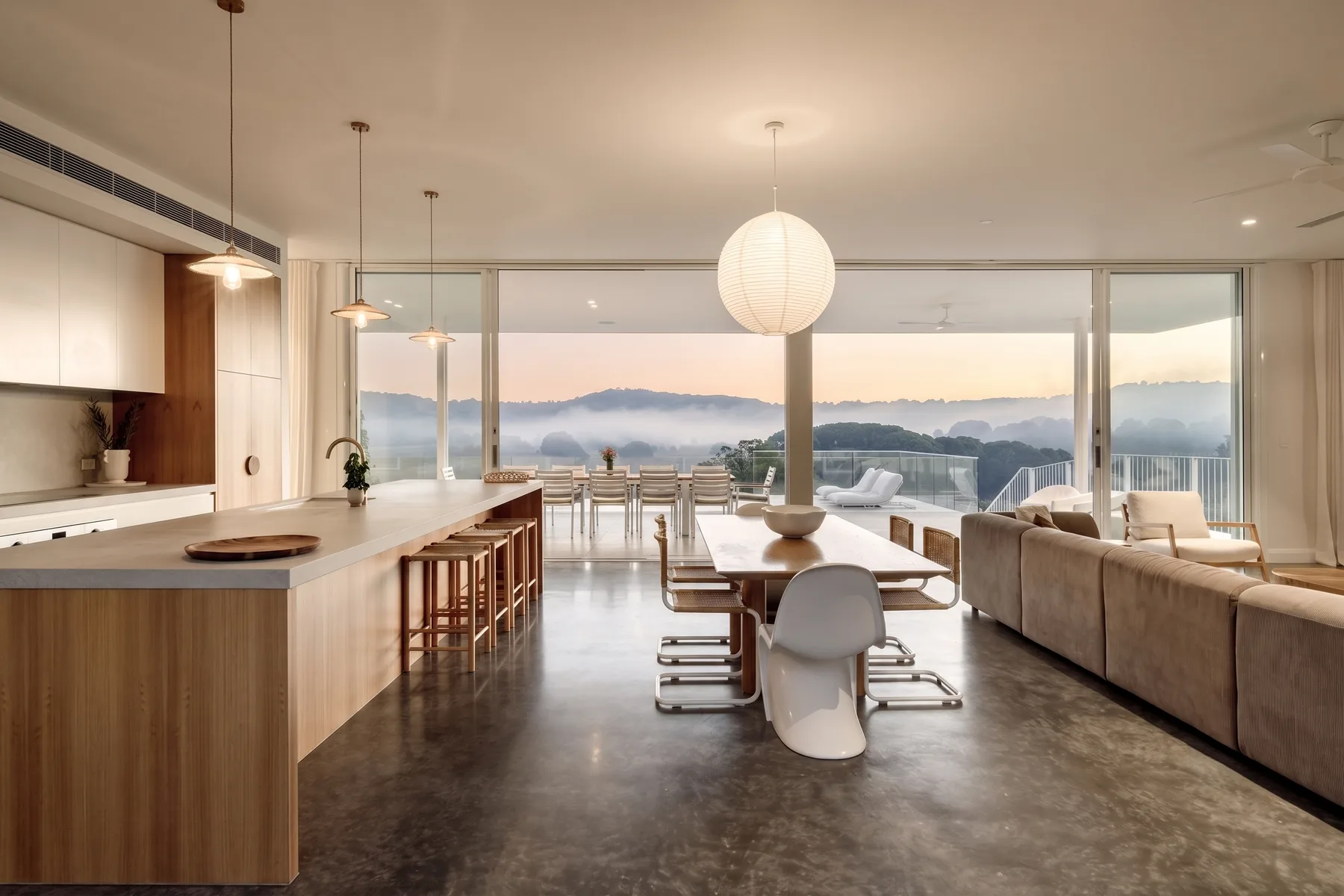
Our own finish. Architectural concreters deliberately work movement and tonal variation into the slab, then we lightly polish the surface, without deep grinding, to lock in that handcrafted look and add real durability.
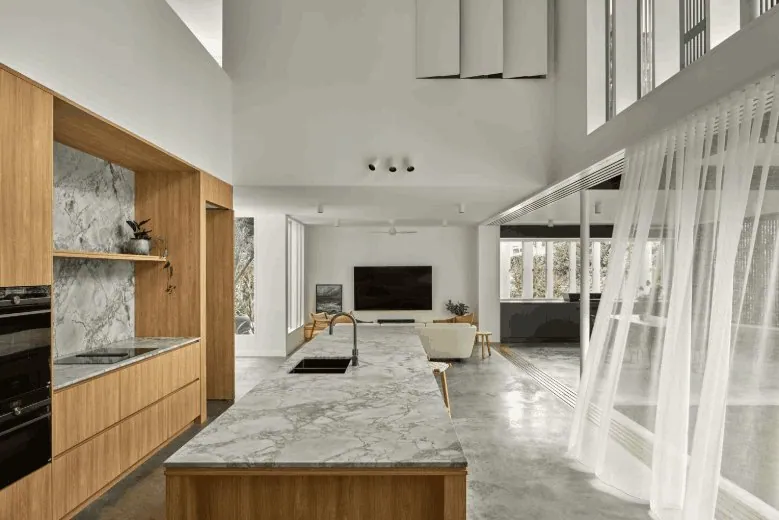
A standard burnished floor is a step up from a plain slab, but next to a mechanically polished or grind and seal finish its limits start to show:
A penetrating seal lifts stain resistance and helps it wear, but where a floor has to stay sharp under heavy or public use, a mechanically polished (MPC) or grind and seal (G&S) finish is the standard. Both grind the whole surface back to a consistent result; MPC then densifies and polishes the slab for the hardest, longest-lasting finish, while G&S is sealed with a protective topcoat you can maintain and refresh over the years.
This is where our floors differ. Experienced architectural concreters deliberately work the slab during the pour, power trowelling gentle movement, soft clouding and light and dark tonal variation into the surface, a handcrafted character that cannot be replicated later.
Once it has fully cured we carry out a light surface polish, with no grinding, that keeps that character while lifting performance: densification, fine resin polishing and a penetrating sealer, with an optional guard, give better scratch and stain resistance, increased surface density, easier maintenance and lasting durability in a matte, satin or low-sheen finish. Because the movement is worked by hand while the concrete is still plastic, no two floors are ever identical.
The same two words cover very different floors. Here is how standard burnished, burnt, mechanically polished and our architectural finish compare.
| Feature | Standard Burnished | Burnt Concrete | Mechanically Polished | OzGrind Architectural |
|---|---|---|---|---|
| Power trowelled | Yes | Yes, heavy | Sometimes | Yes, purposefully |
| Decorative movement | Minimal | Random | No | Deliberately created |
| Mechanical polishing | No | No | Yes | Yes, light surface polish |
| Diamond grinding | No | No | Yes | Minimal refinement only |
| Aggregate exposure | None | None | Optional | None |
| Surface protection | Limited | Limited | Excellent | Excellent |
| Durability | Good | Good | Excellent | Excellent |
| Appearance | Uniform | Dark industrial | Clean contemporary | Natural architectural movement |
The difference between burnished and polished concrete comes down to when and how the surface is finished. A burnished floor is finished entirely during the pour: the slab is power trowelled to a sheen and left as the wearing surface, with little or no further refinement. Polished concrete is ground back with diamond tooling, densified and refined to a chosen gloss once the slab has fully cured, so it holds its finish far longer and gives a consistent, repeatable result.
Our architectural finish sits between the two. Experienced concreters deliberately work the slab during placement to create movement, clouding and tonal variation, character that cannot be replicated once the concrete has cured. At full strength we then carry out a light surface polish: no grinding, no exposed aggregate, just fine diamond polishing, densification and a penetrating sealer that preserve the handcrafted character while adding durability, stain resistance and easier maintenance.
The result combines the warmth and individuality of a traditional burnt or burnished finish with the performance of a mechanically polished floor. That is why we call it OzGrind's Architectural Burnt, Burnished and Polished Concrete.
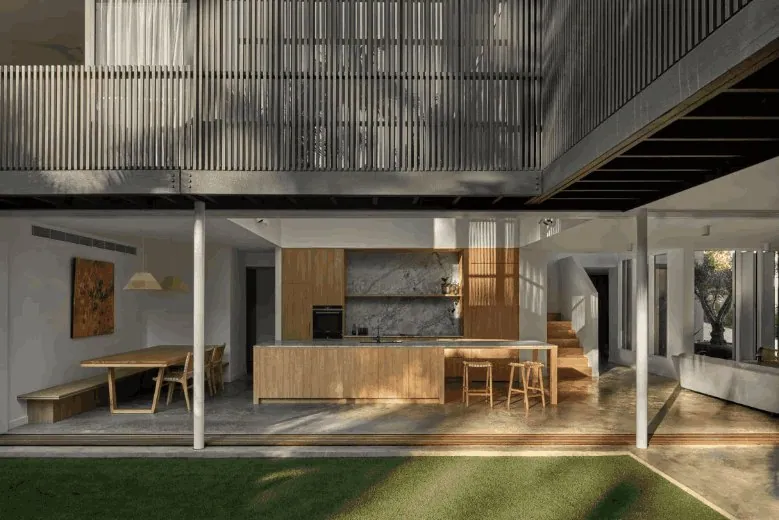
Industrial diamond grinders and experienced operators for a flawless, even finish, every time.
From a single living room to a full retail fit-out, one trusted, fully insured contractor for both.
Visit the OzGrind showroom to see the finishes, colours and gloss levels in person before you decide.
"We just had our downstairs floors done in semi-exposed and we are very happy with the outcome. Ethan was fantastic, very efficient and knowledgeable. Would definitely recommend."
"Great communication, completed faster than expected, professional team and excellent MPC floor at the end!"
"So fast and professional. New slab MPC matt finish came up amazing, we are so happy with not only the finish but the communication and workmanship."
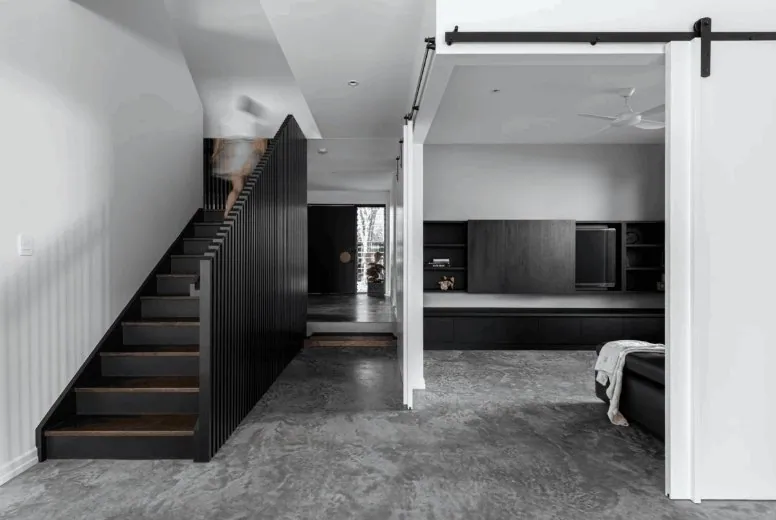
A snapshot of recent burnished and polished concrete floors across Brisbane, the Gold Coast and the Sunshine Coast.
Tell us about your space and whether your slab is new or existing. We will come back within 48 hours with honest advice and a no-obligation quote.
We grind and polish concrete floors for homes and businesses right across Brisbane, the Gold Coast and the Sunshine Coast.
Burnished concrete is a slab finished to a sheen with a power trowel while the concrete is still curing. The blades close and tighten the surface, leaving a smooth, lightly reflective floor. It is a concreter's finish done at the time of the pour, not a mechanically ground and polished floor, so the look and durability vary with the slab and the operator.
A burnished floor is trowelled to a sheen as the slab cures, so it hardens and densifies the surface paste of the slab. A mechanically polished concrete floor is ground back with diamonds, densified and refined to a chosen gloss once the slab has cured. Polishing cuts into the slab and hardens it, so it holds its finish far longer and gives a consistent, repeatable result.
No. People often use the words interchangeably, but they are different processes. Burnishing is a trowel finish applied during the pour; polishing is a multi-step mechanical grind and densify done afterwards. If you want the durable, low-maintenance floor most people picture when they say polished concrete, that is a mechanically polished or grind and seal finish.
Burnishing densifies and hardens the surface as the slab cures, so a burnished floor is tougher and better looking than a plain trowelled slab. Its limits show against a mechanically polished or grind and seal floor: less stain resistance, gloss and tone that vary with the pour, visible trowel marks and wear in busy areas, and no chosen, consistent gloss. Where a floor has to last under heavy or public use, MPC or grind and seal is the standard.
Yes. In most cases we can grind back a tired or uneven burnished slab and bring it up as a mechanically polished or grind and seal floor. Grinding removes the worn top layer, evens out trowel marks and lets us set the stone exposure and gloss level you want. We will assess the slab and tell you honestly what finish it will take.
Cost depends on the size of the area, the condition of the slab and the finish you choose. As a guide, mechanically polished concrete and grind and seal sit in different price brackets, and an existing slab that needs repair or coating removal adds to prep. The best way to get a real figure is a free measure and quote, or try our cost calculator for an indicative price.
A burnished floor has a smooth, closed surface, so like most polished floors it can be slippery when wet. For wet areas, outdoor slabs or pool surrounds we can add a fine grit or a slip-resistant sealer to lift the wet grip to the level your space needs, without changing the look.
Yes. Burnishing tightens the surface but does not make it stain proof, so a penetrating sealer is worth applying to resist water, oil and food marks and to make cleaning easier. A sealed burnished or lightly polished floor is far more forgiving day to day, and the sealer can be refreshed over time.
The base colour comes from the concrete mix and any oxide added at the pour, from natural grey through to charcoal, buff and earthy tones. Because the finish keeps the slab's own character, expect gentle movement and tonal variation rather than a flat, uniform colour. We can talk through mix and oxide options before your pour.
It can work outdoors, but an exposed burnished slab tends to mark and wear faster and can hold moisture. For driveways, patios and pool surrounds we usually recommend a honed or grind and seal finish with added slip resistance, which handles weather and traffic far better while keeping a similar natural look.