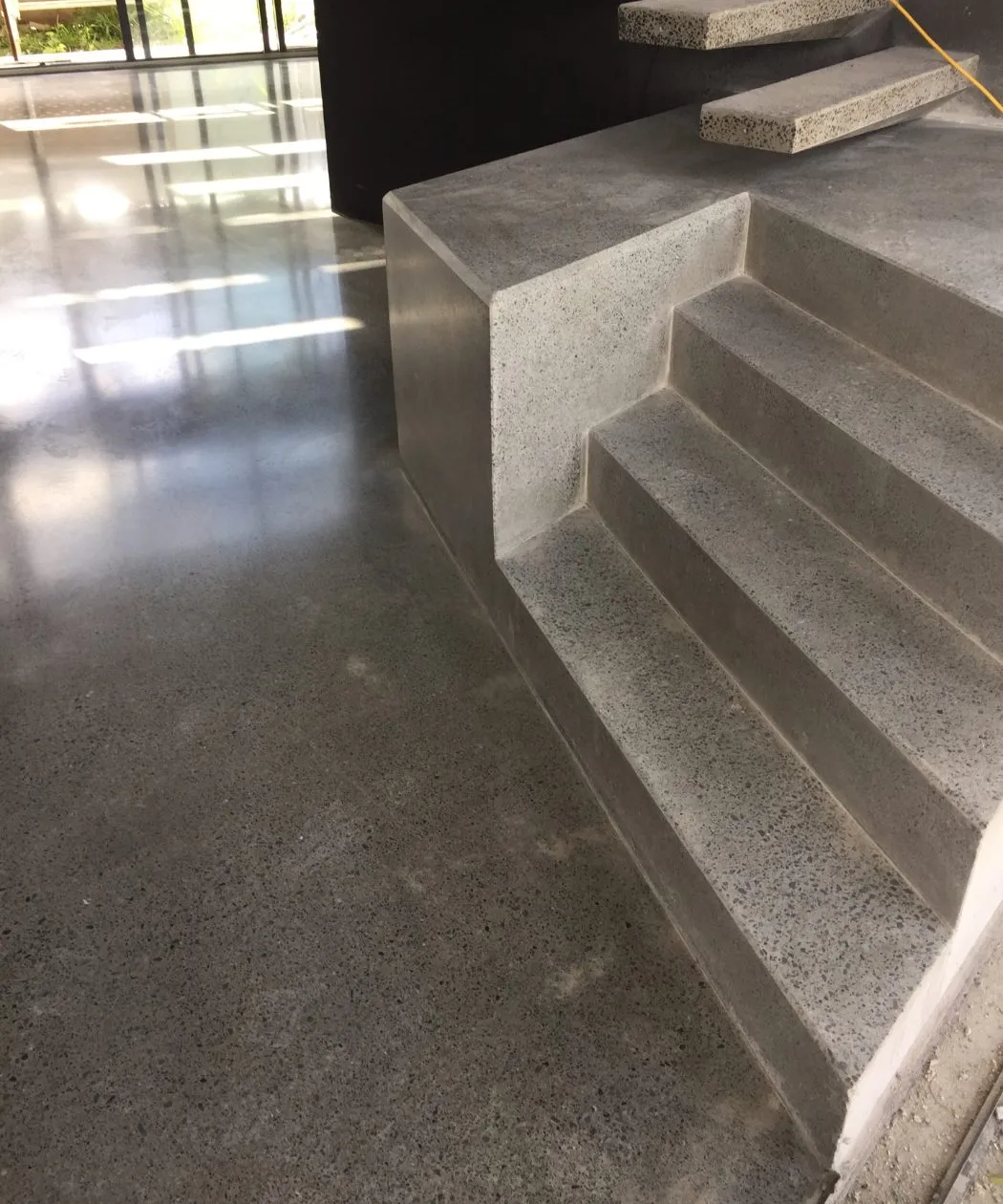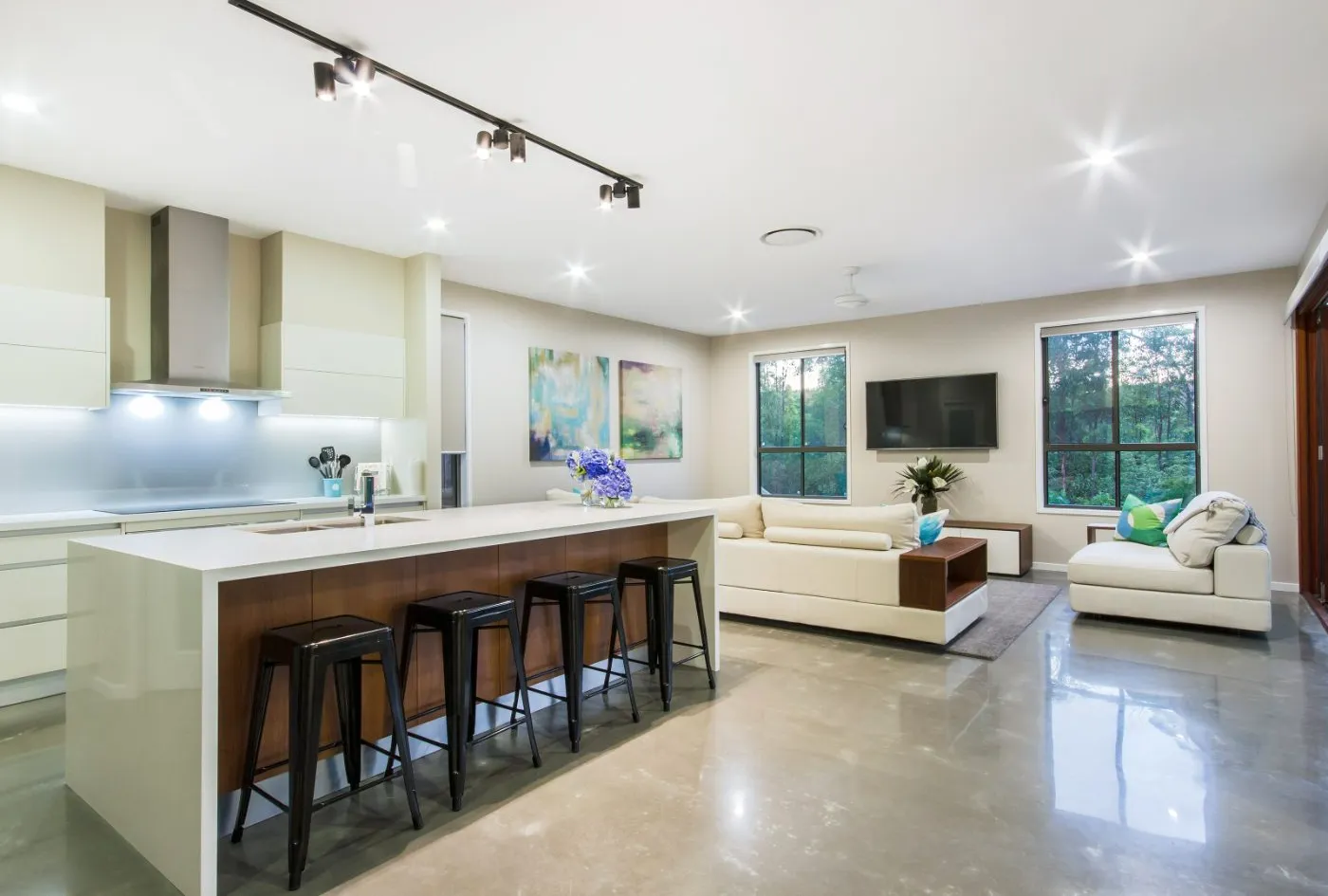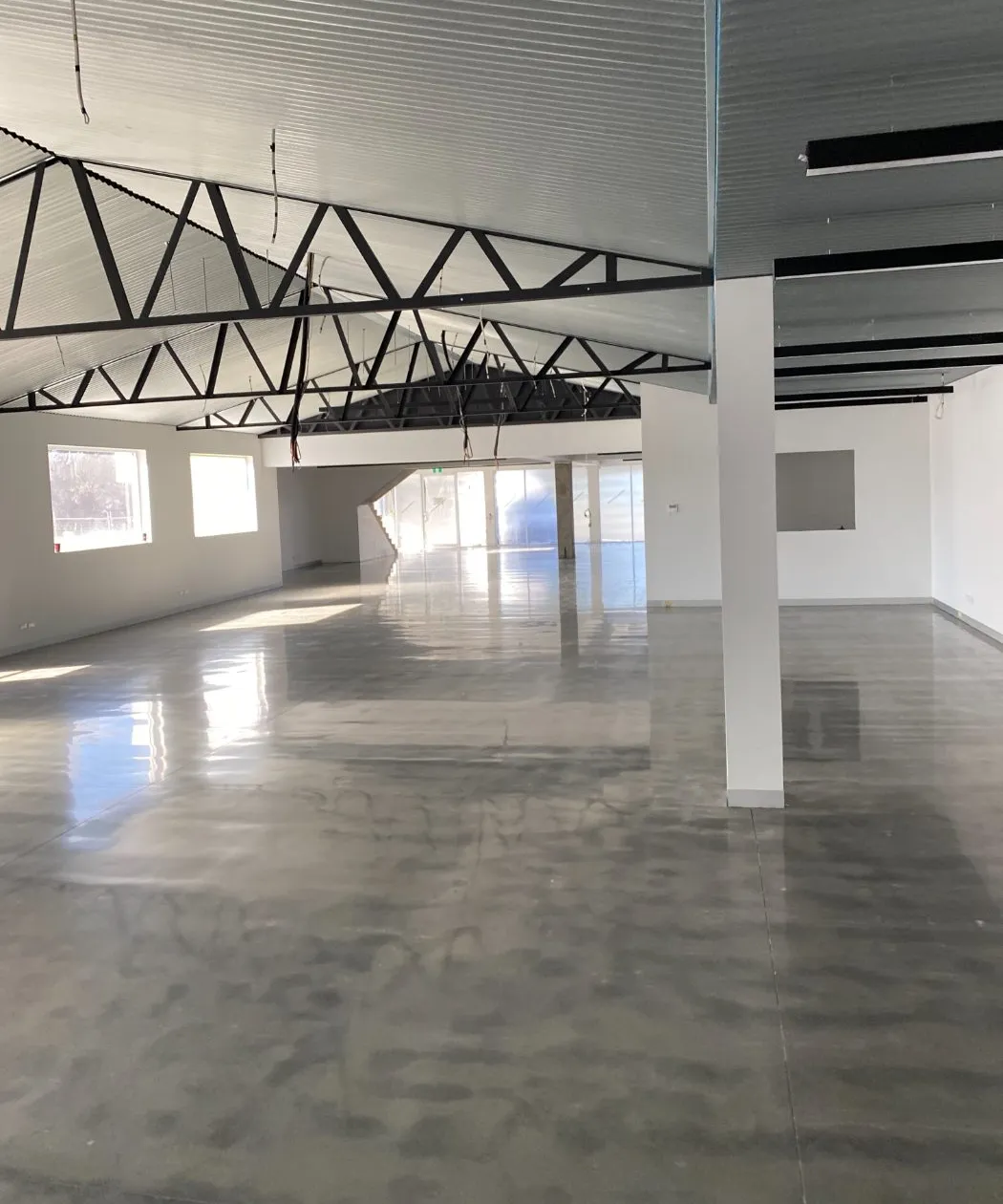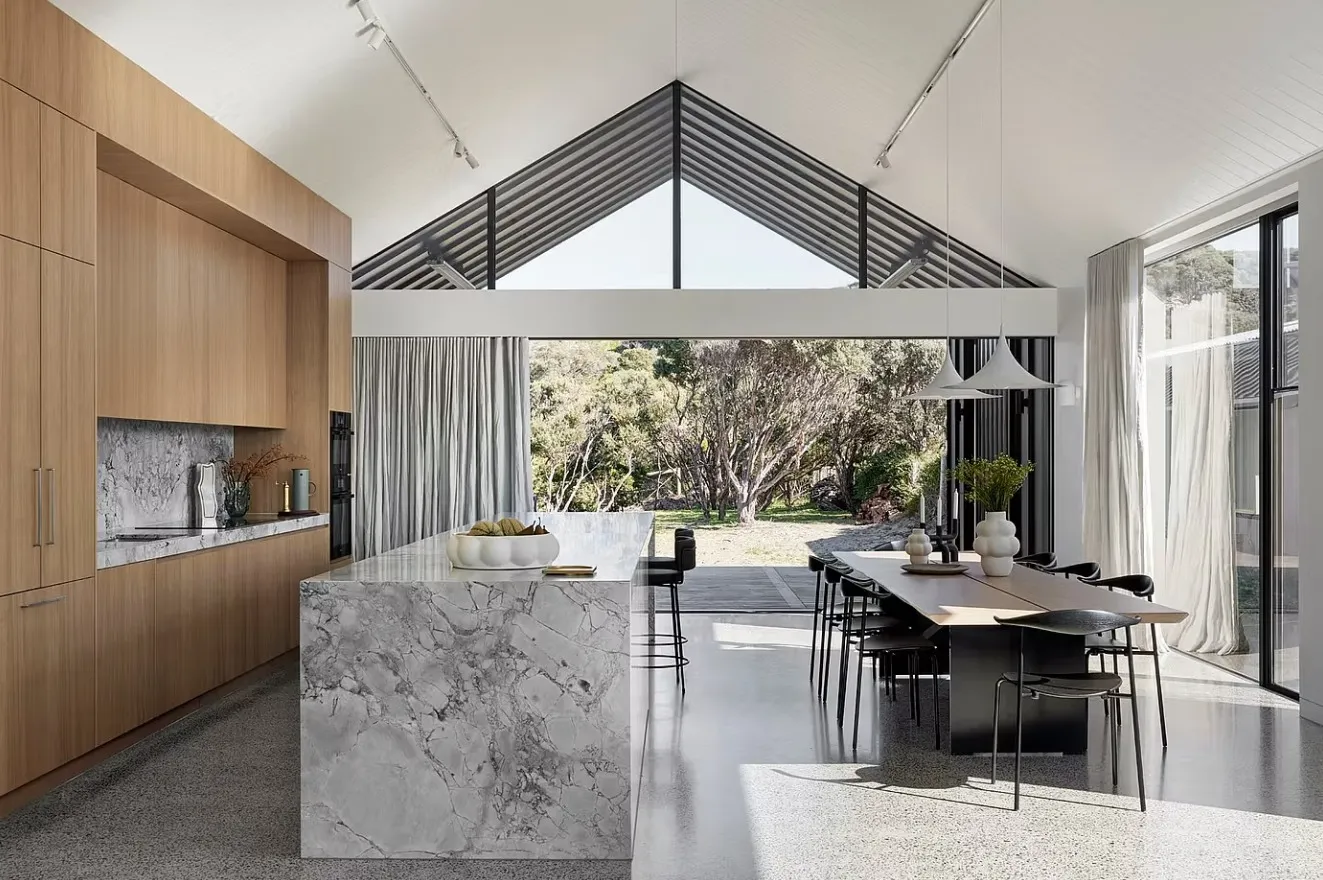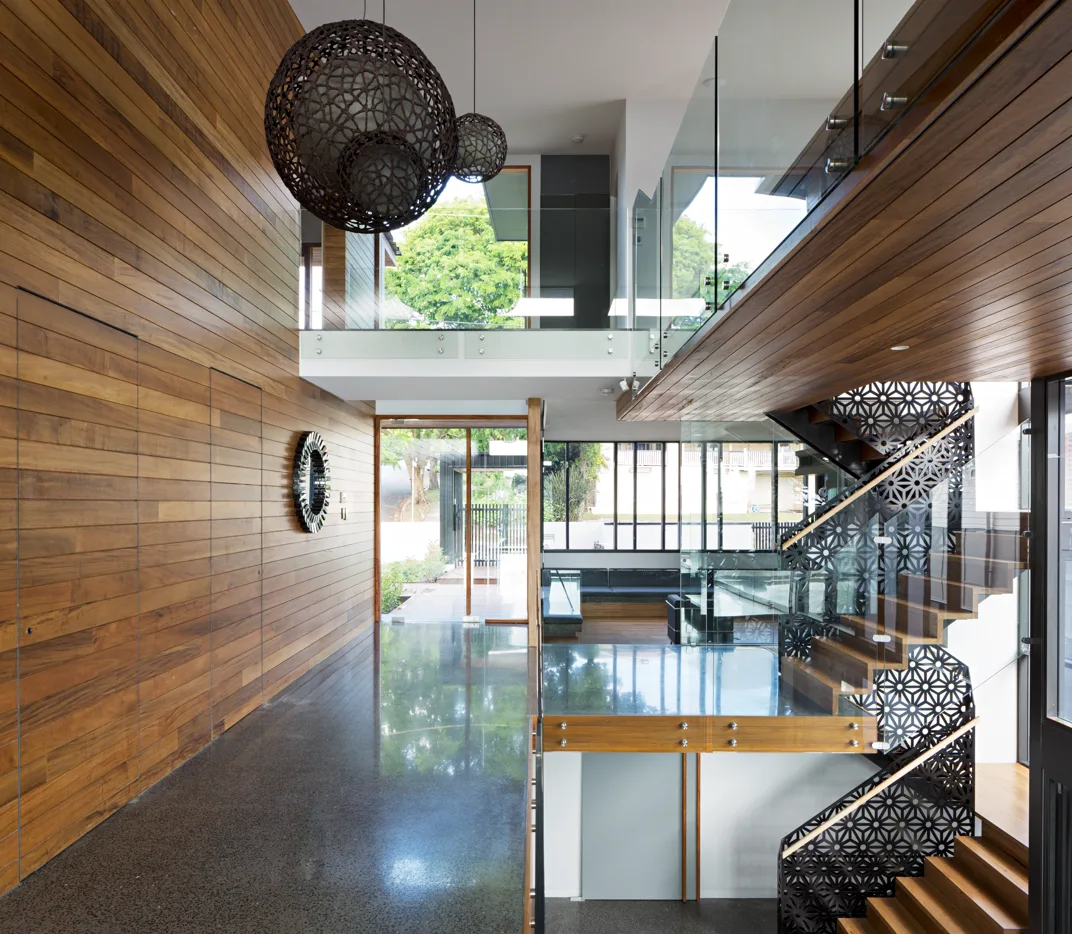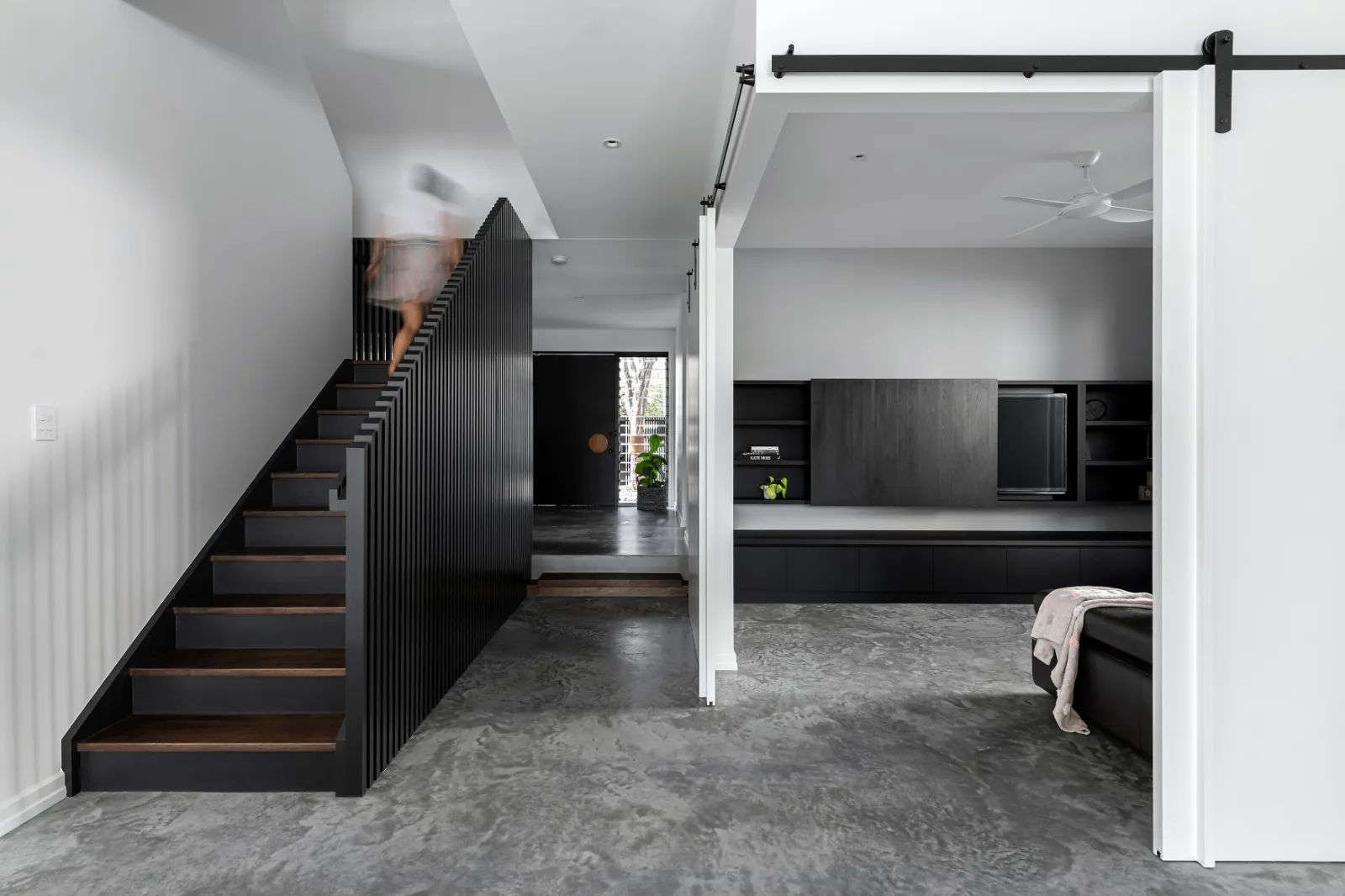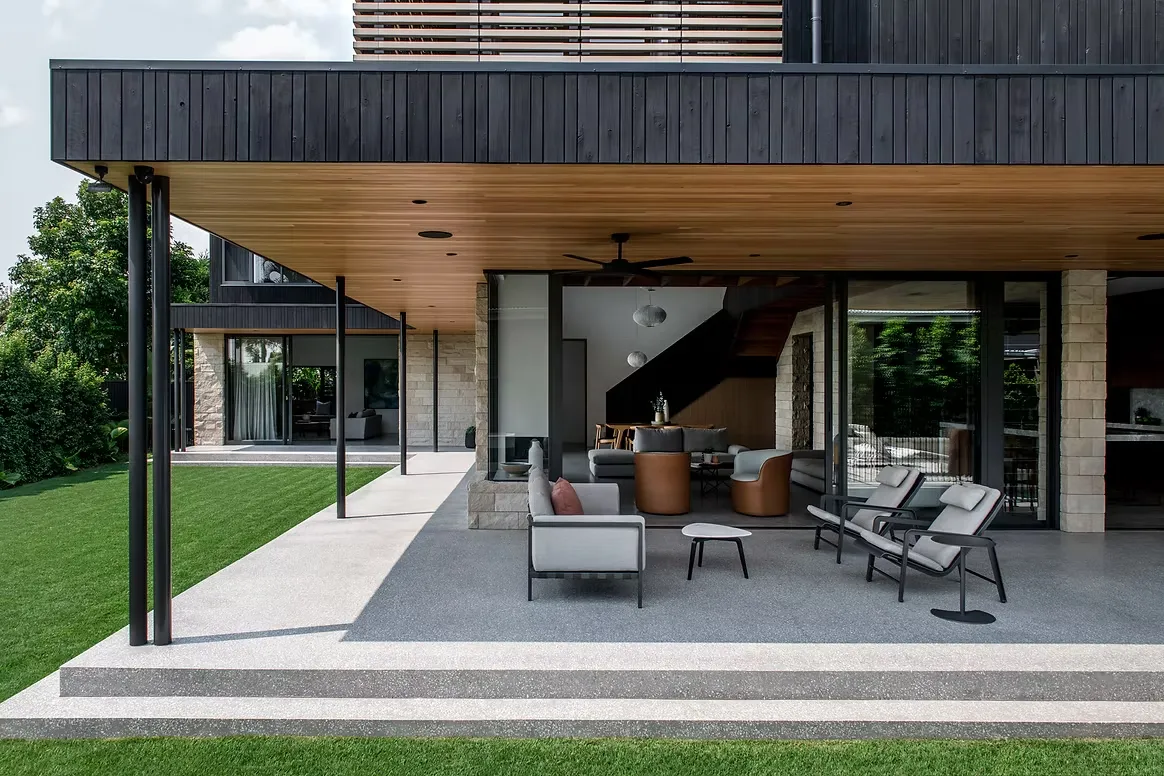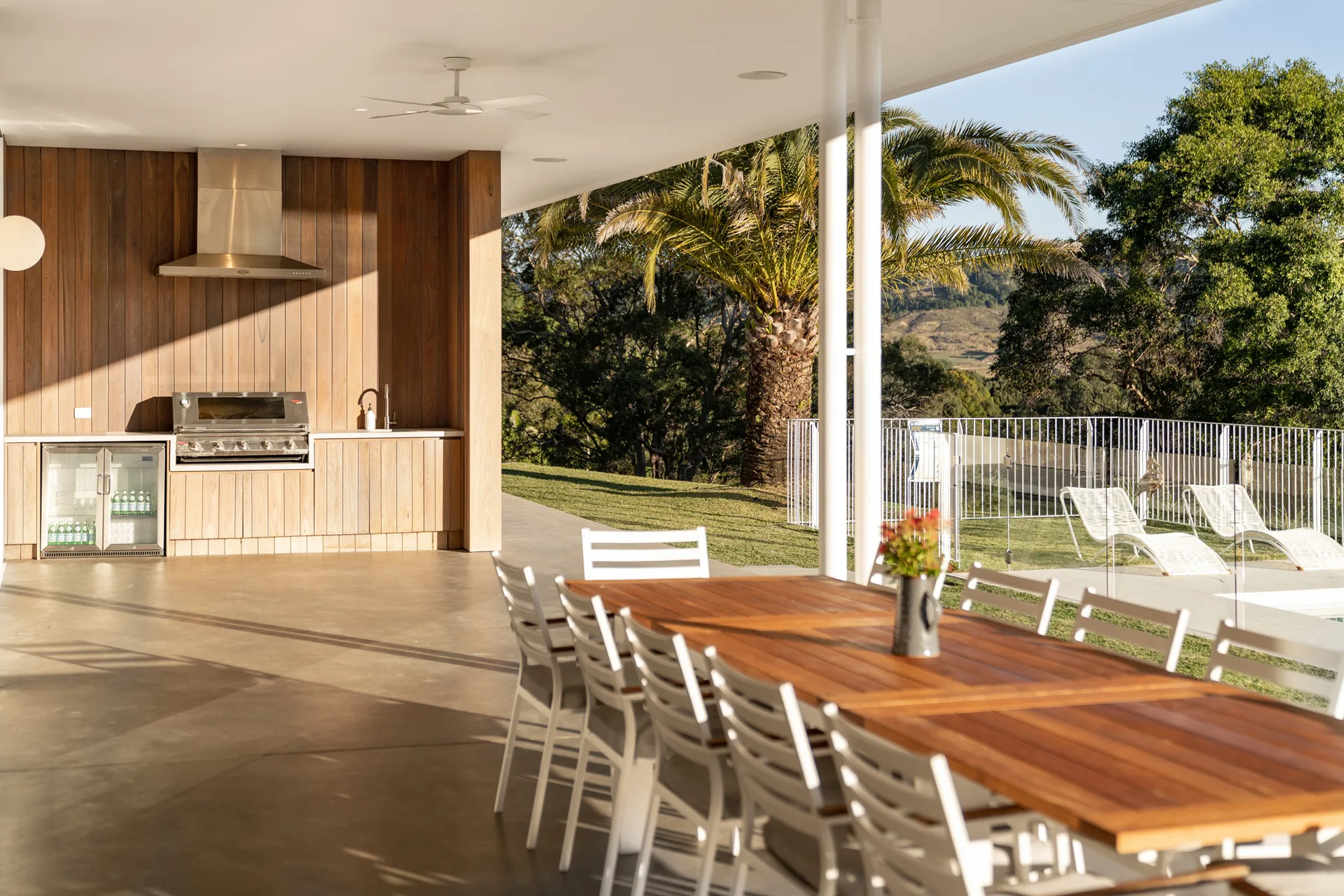
Everything you need to specify a polished concrete floor with confidence: the six things to nominate, slip ratings, slab pour guides and finish comparisons. The same documents we work through with architects, designers and specifiers on every project.
Every polished concrete floor is defined in the spec: the mix, the system, the stone exposure and the gloss level. Nominate those clearly and the floor that gets built is the floor you designed. The resources below set out exactly what to write and why.
You can specify every one of these. Nominate the six items in our specification checklist and the concreter, the builder and the polishing contractor are all working to the same floor. Two lines in the spec save weeks of rectification later.
Get the Guides ↓And how each finish affects the budget, the durability and the longevity of the floor? There are two core systems, and the gap between them is bigger than most specs allow for.
A mechanically polished floor (MPC) is ground and densified, so it can last 50 years or more with almost no upkeep. A grind and seal is a topical coating that usually needs recoating around every 7 years. The same grey floor on the drawing, a very different lifespan and cost.
Most tenders simply say "polished concrete" and stop there, with no system, no stone exposure and no gloss level. Those three choices completely change both the look and the price. Nominate them and every trade prices and builds the exact floor you designed.
We are happy to comment on your specification, and we love giving advice. Contact our office with any questions and we will point you in the right direction.
Ask Our Team →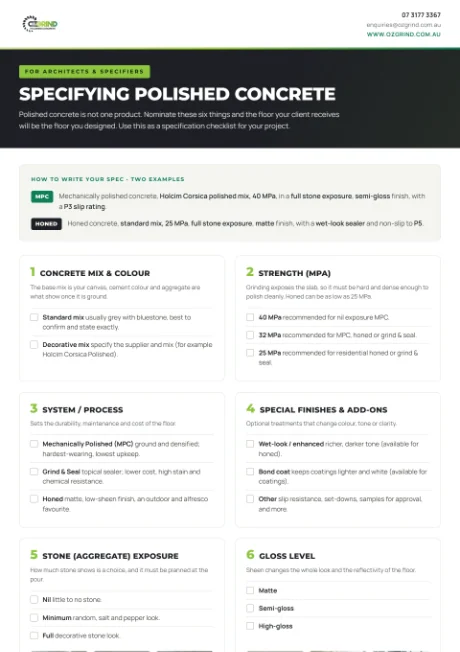
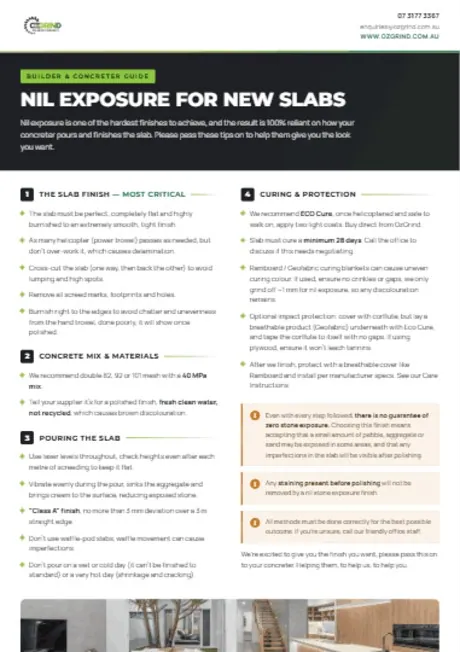
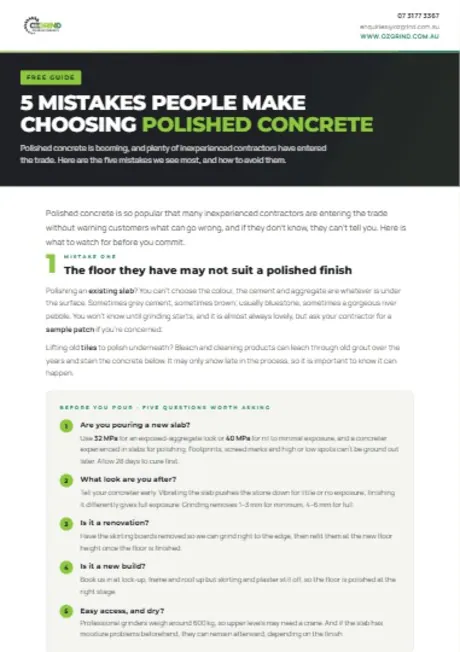
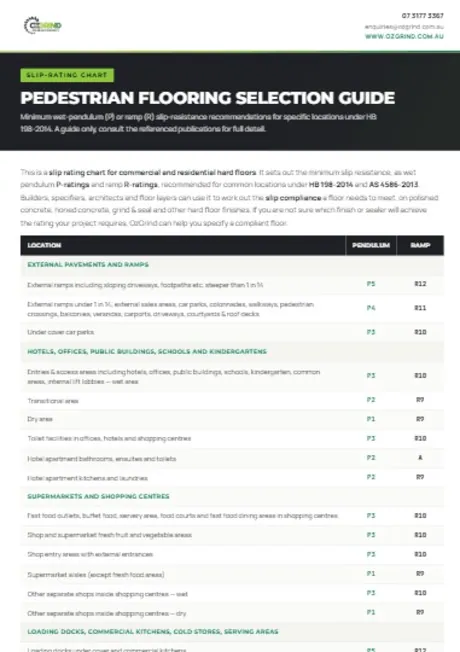
A complete polished concrete specification only needs six decisions. Our checklist walks through each one, with example spec wording you can copy straight into your documentation.
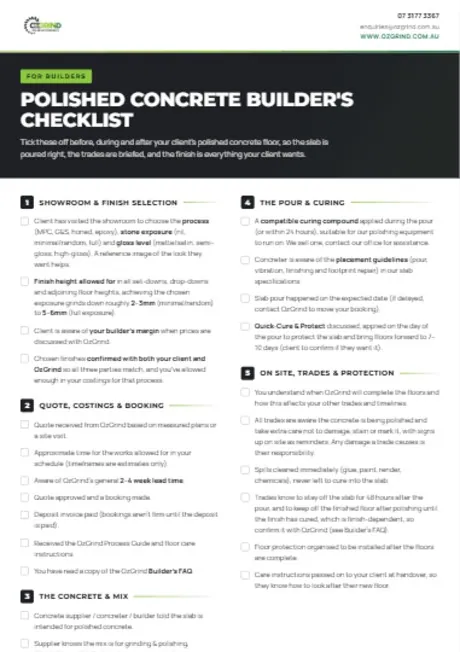
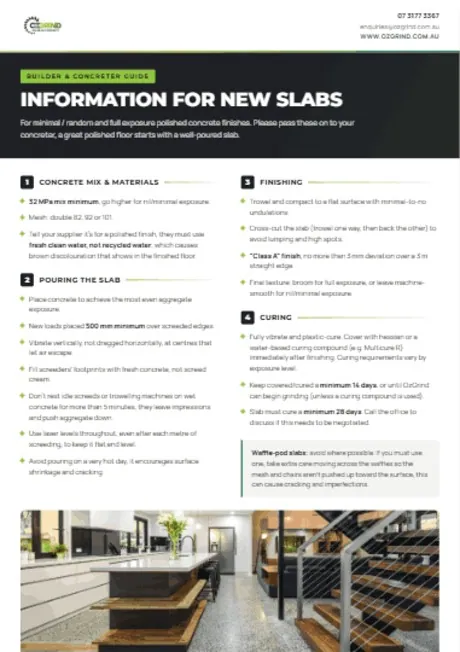
Our most requested specification documents. Download, print and drop straight into your project documentation.
Architect-designed residence, retail tenancy or commercial development, involving the polishing contractor at design stage usually means a better floor. We are happy to review your drawings and specification, recommend the right mix, and provide samples and finish advice before anything is documented. A quick conversation now is the easiest way to make sure the finished floor matches the intent.
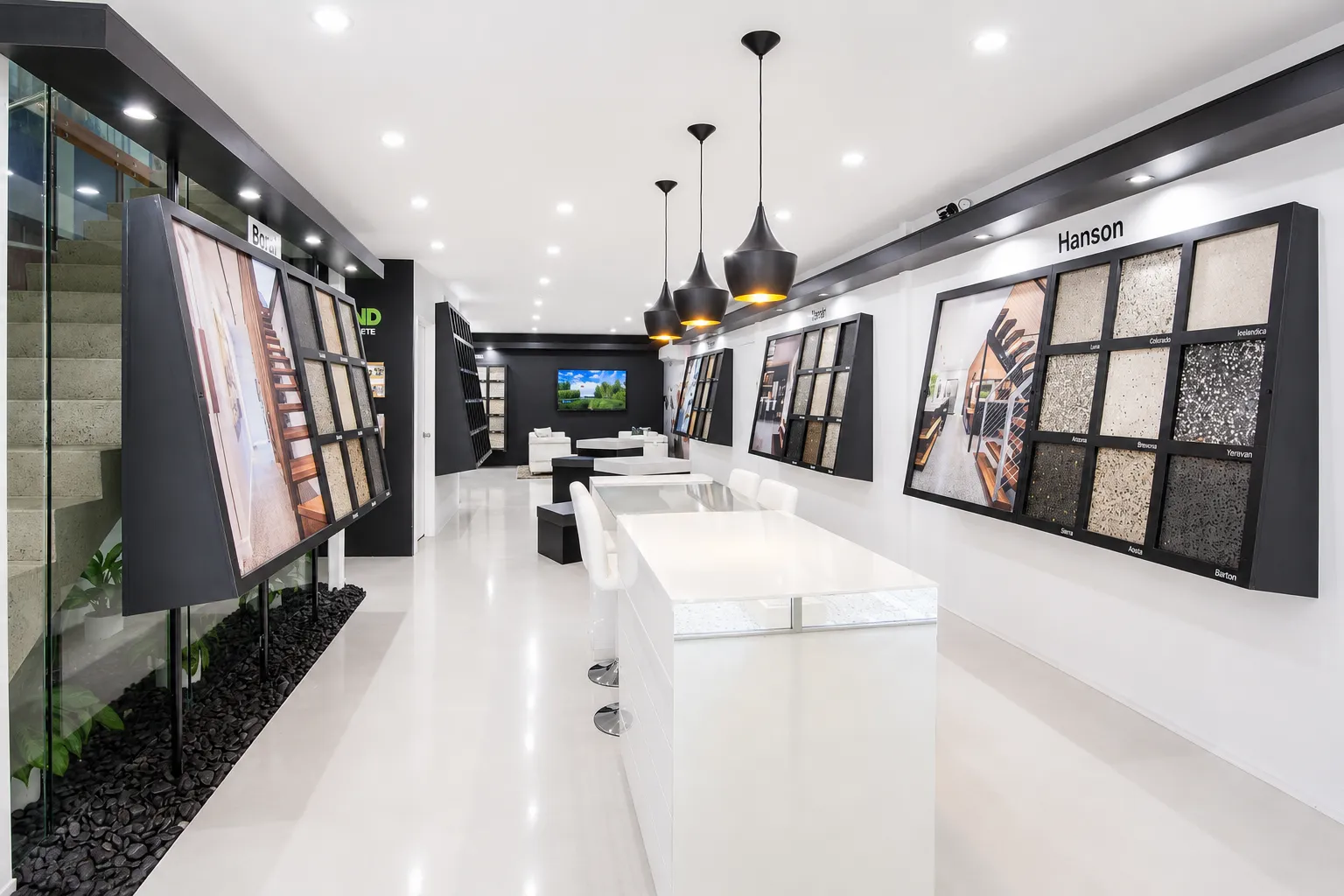
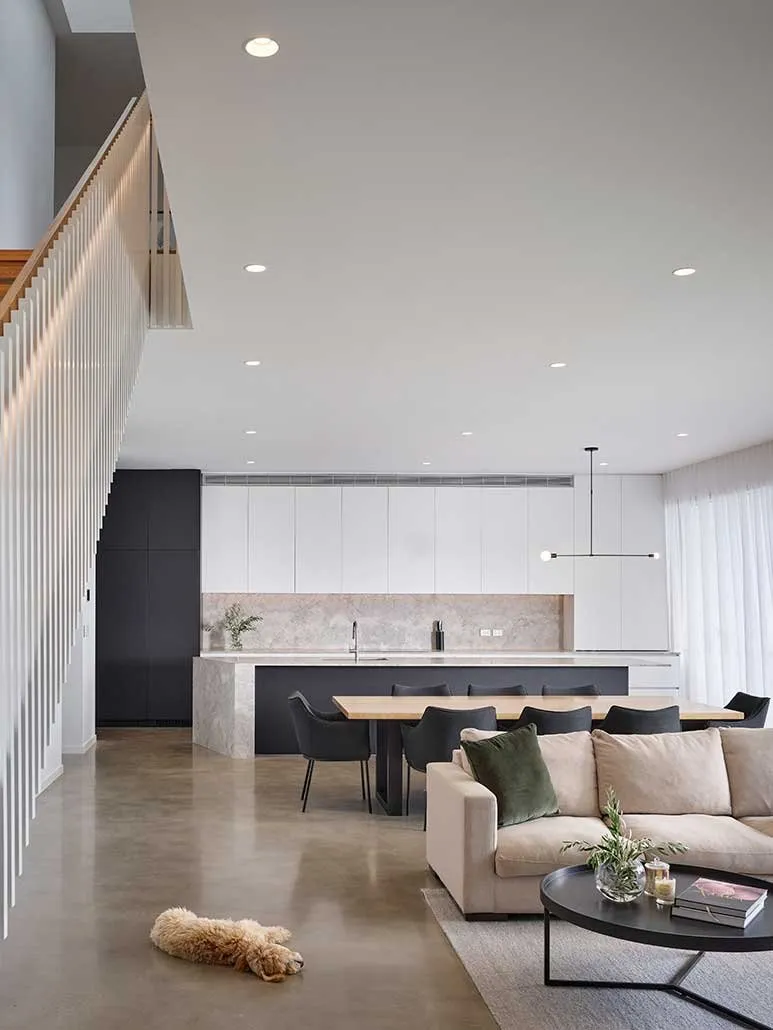
Polished, honed or coated, the exact finish should be locked down before the slab is documented. Compare the options below, or bring your client into our Eagle Farm showroom to choose the exact look against full-size samples.













Send us your drawings or draft specification. We will come back within 48 hours with honest advice, mix and finish recommendations, and a no-obligation quote.
Nominate an AS 4586 rating in the spec. As a guide, P3 (R10) suits internal wet areas and covered alfresco, and P4 (R11) suits pool surrounds, ramps and open external areas. We achieve it with a honed finish or a grind and seal with a non-slip additive, so the rating is met without losing the look. Our slip rating chart maps area to rating.
Bring your client into our Eagle Farm showroom to choose against full-size samples, or we will prepare sample panels in the nominated mix and gloss. Sign the finish off before the slab is documented so the mix, stone exposure and gloss are fixed in the spec, not left to interpretation on site.
This mainly applies to a mechanically polished floor (MPC), where grinding exposes the slab so the mix has to be right. For MPC, nominate 32MPa with 10mm aggregate at 80mm slump (32/10/80) for minimum, random or full stone exposure, and 40MPa for nil exposure, always fresh water, never recycled. A honed or grind and seal finish is more forgiving and does not need the same mix nominated. Our new-slab guide sets it out for your concreter.
Yes. We use grind and seal with a non-slip additive and set out the waterproofing sequence of rebate, membrane, then hone or polish after curing. Confirm the detail with your certifier.
MPC (mechanically polished concrete) is ground and densified for the hardest wearing, lowest maintenance floor. Grind and seal is a topical coating, lower cost with high stain and chemical resistance, recoated over its life. Choose by budget, traffic and maintenance. Our MPC vs grind and seal comparison sets out the trade-offs.
Saw-cut control joints are part of the design, not a defect. Nominate the joint layout with your engineer and we fill them with a matching or contrasting polymer. Shrinkage cracks are filled and polished through, so they read as a feature of the floor, not a fault.