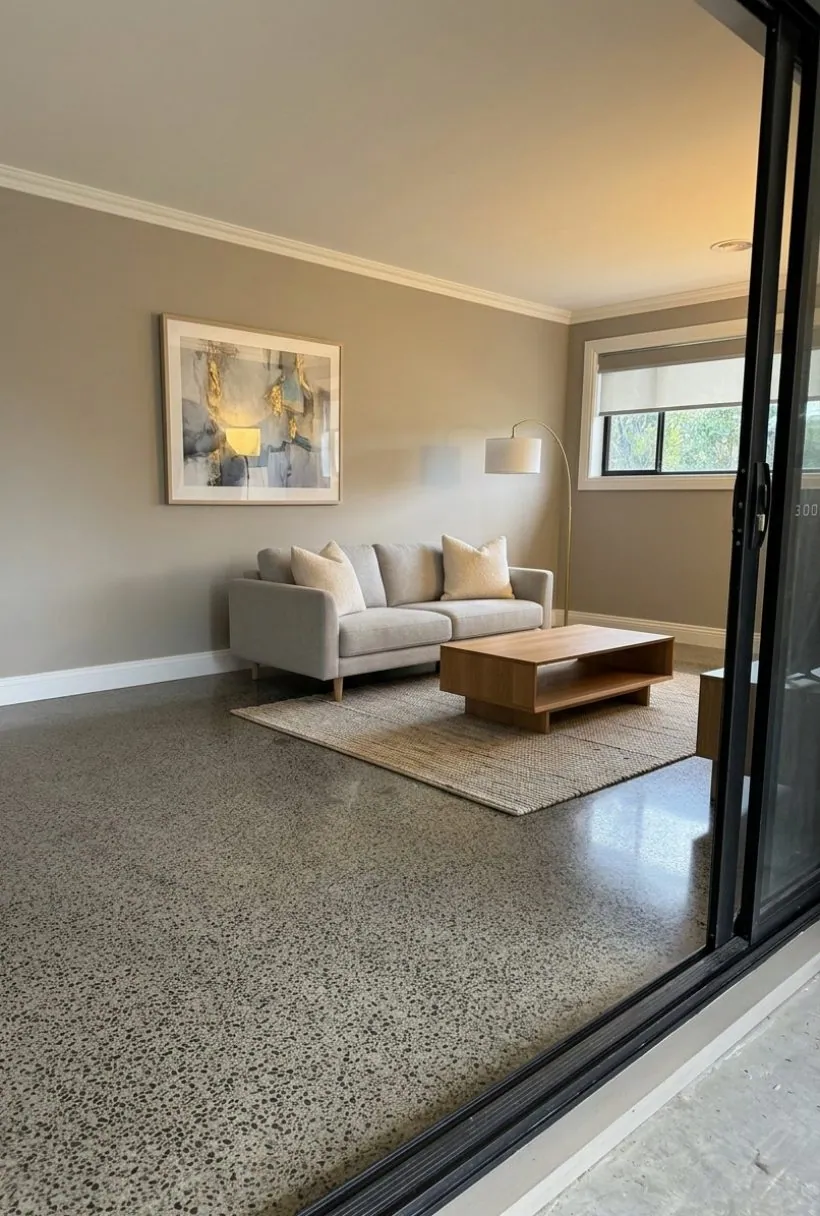
Do not stick anything to your floor, not even painters' tape. Adhesives can lift or peel the sealer when removed, which often means a full floor rectification at the owner's cost.
After sealing, keep off the floor for at least 24 hours, and avoid vehicle traffic or moving furniture onto it until fully cured. Keep it dry for at least 72 hours after the final coat. Some coatings take up to 14 days to fully cure depending on weather. Contact our office if you're unsure of curing times.
Wait the full curing time before laying any protection. Use a breathable product such as Ramboard or Geo-Fabric, installed per manufacturer specifications. Non-breathable coverings like plastic trap moisture and can leave a milky finish or cause the coating to delaminate. If your slab is less than 28 days old, consult our office before applying any protection. Please ensure other trades on site take the same care: any rectification required for scratches, scuffs or damage they cause will be chargeable. Excessive moisture, rising damp or water ingress through the slab can also cause whitening, bubbling or delamination of the coating.
Sweep regularly with a dry micro-fibre mop or soft bristle broom to lift dust and grit. If vacuuming, use only a micro-fibre head attachment without caster wheels. Loose grit or stone acts like sandpaper underfoot and can damage the surface, so remove it promptly.
Mop with warm water or a pH-neutral cleaner specifically recommended for sealed concrete floors. Many supermarket floor cleaners, disinfectants, degreasers and citrus-based cleaners may damage the coating. Use a gentle micro-fibre head. (Take care, as wet floors can be slippery.)
Place doormats at entrances to reduce the dirt and grit tracked in. Even though the floor is sealed, this helps prevent scratches and abrasion.
Don't drag furniture. Fit felt pads to furniture legs and use a breathable mat under wheeled office chairs. Pets' claws can also scuff the coating.
To keep your floor looking its best, OzGrind recommends a "sand and re-seal" every 5 to 7 years, provided that the floor has been properly cared for. This will ensure your floor remains stain resilient and retains its shine.
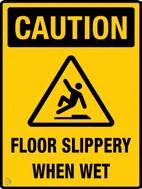
During the curing process of your floor, directly after installation, you must remain off the surface until fully cured as it may pose a slip risk. Curing times vary depending on the product applied, so please refer to the relevant care instructions on the prior page.
When we hand over a completed, compliant floor, floors may still be slippery when wet and there is a slipping risk, so please adequately warn the property owner and any pedestrians.
Where included within the project scope, OzGrind will perform a slip test to AS 4586:2013 for new surfaces for residential buildings that have stairs, steps, landings, ramps or common areas like shared driveways, and for all commercial projects and public spaces. Slip tests are only valid at the time of the test: slip resistance can change quickly depending on use. It is the premises owner's, occupier's or builder's responsibility to get a slip test for existing surfaces to AS 4663:2013 prior to handing over the floor to the end user. It is up to the premises owner to have ongoing slip testing, as required.
Please be aware that over time floors can become slippery and will need ongoing slip testing and monitoring to ensure they remain compliant with the relevant Australian Standards and building codes. It is the responsibility of the property owner to ensure floors are maintained. Please pass on these care instructions and warnings to the end user.
Certain cleaning products can negatively impact the slip resistance of a floor at a faster rate. We recommend that you use specialised cleaning products in order to prolong the non-slip expectancy of your surfaces.
These care instructions are provided as general guidance only. Concrete is a natural product and can be affected by a wide range of chemicals, contaminants and environmental conditions. The points listed cover common causes of damage and staining but are not exhaustive. OzGrind Polished Concrete accepts no liability for damage resulting from a failure to follow them. All other terms are set out in our Terms & Conditions.