A plain-English guide to polishing concrete: the tools, the diamond grits, densifying and sealing, step by step. Plus an honest look at where DIY works, and where it pays to bring in a professional crew.
Polishing concrete means mechanically grinding the surface of a slab with progressively finer diamond tooling, hardening it with a densifier along the way, until it reaches the sheen you want. It is not a coating you roll on. The finish comes from the concrete itself, refined step by step.
A small job like a benchtop or a single garage bay is within reach for a confident DIYer with hired gear. A whole-house floor, a true high gloss or a densified mechanical polish is a different story. The guide below walks through the full process so you know exactly what is involved either way.

Free guide: 5 mistakes people make when choosing a concrete finish.
This is OzGrind's actual sequence for a mechanically polished concrete (MPC) floor, shown here for a full stone exposure, matte finish. The depth of the first grind sets the look, we grind to show as little or as much of the stone as you want to see. And to be clear: this is not a DIY sequence, MPC is a specialist process that even some professional crews find challenging.
One pass with 30/40 grit metal bond diamonds to open the slab and expose the aggregate.
One pass with 50/60 grit metal bond diamonds to refine the scratches left by the first cut.
Cracks and holes are filled, then the floor is grouted.
A concrete hardener is worked into the floor, strengthening the surface so it takes a fine polish and holds its sheen.
The floor is polished from 50 grit up to 1500 grit diamonds, depending on the gloss level you want.
A premium penetrating sealer is applied and burnished to lock in the finish and guard against stains.

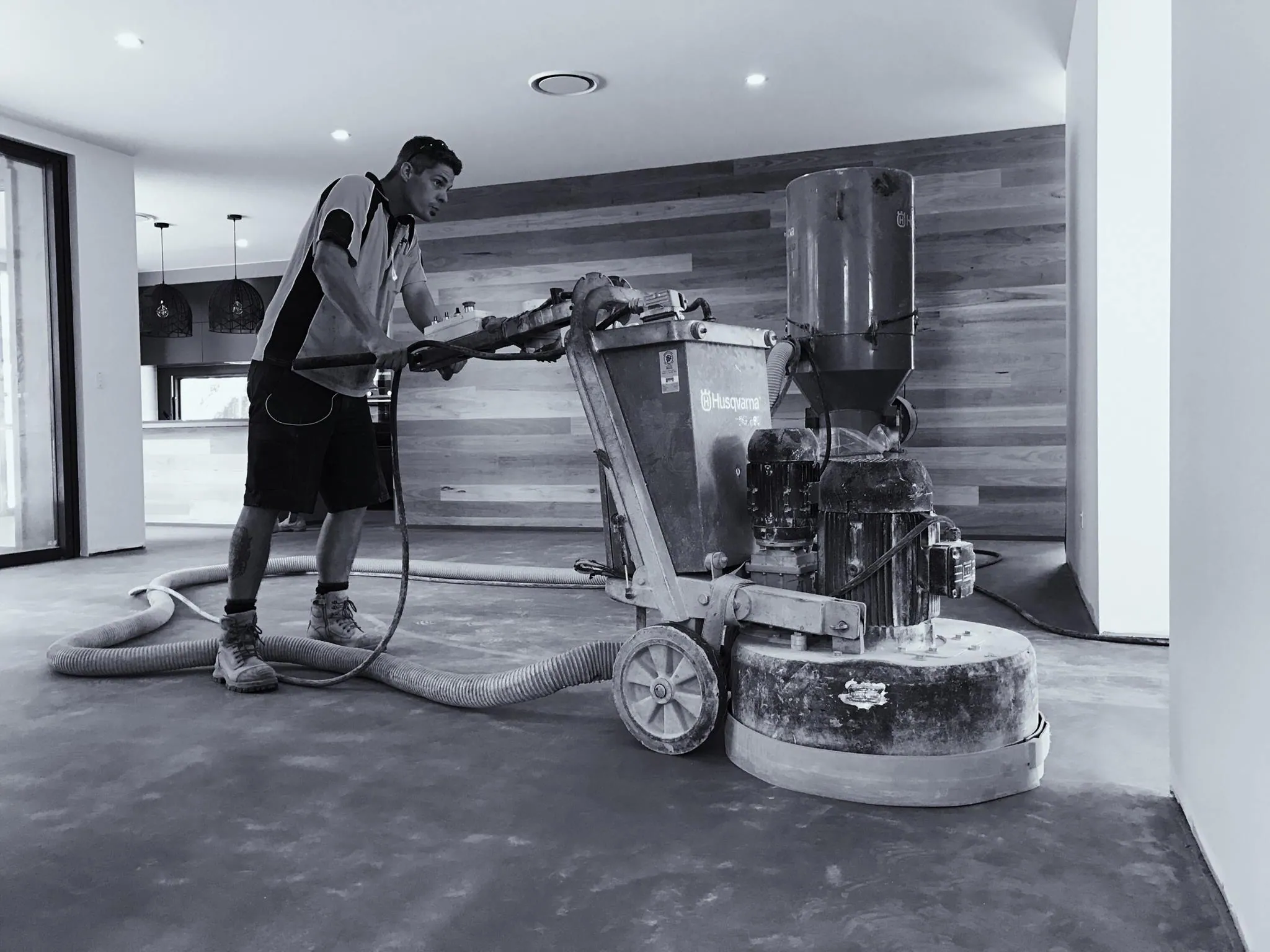
That list covers a grind and seal, which is the only finish a DIYer can maybe get away with, and even then we would not recommend it. If you were picturing resin pads in a full grit range and a concrete densifier, that is mechanically polished concrete (MPC), a finish even some professional crews find challenging. MPC is definitely not a DIY job: it takes a planetary floor grinder with multiple heads and a lot of experience, and that is what gives a professional polish its flat, even, mirror finish.
A word of caution before you hire a grinder: concrete grinding is not something you can usually just pick up and do. Controlling a grinder takes real practice, and every pass could be permanent: gouge marks, uneven stone exposure and burn rings cannot be sanded back out of a slab. Your house slab is one of the most important structures you own, and repairing a damaged one can cost far more than the savings you were chasing. If the floor matters, it is best to call a professional. Quotes are free, and we will tell you honestly whether DIY is a safe option for your job.
If your floor falls in the right-hand column, we can help. OzGrind grinds and polishes concrete to a flat, even finish with full dust control, see our polished concrete page. Happy to lay your own coating? We can do the hard part, the grinding and surface prep, and leave the top coat to you. Otherwise, get a free quote below.
See and walk on the finishes before you decide. Compare stone exposure and sheen levels in person, or take the 360 virtual tour.
A family-run Brisbane business grinding, polishing and sealing concrete across South East Queensland for well over a decade.
Rated by hundreds of homeowners, builders and businesses across Brisbane, the Gold Coast and the Sunshine Coast.
From a single living room to a full retail fit-out, one trusted, fully insured contractor for both.

"OzGrind did a fabulous job of lifting the tiles and mechanically polishing the slab in our 1970s house. We were really nervous about doing it but are thrilled with the result. In the end, their professionalism and communication far exceeded any other company I dealt with."
"The operations and quoting team @ OzGrind are the best in their field that I have spoken to in Queensland. Their communication on the overall concrete polishing process was impeccable. Best in class."
"OzGrind did an awesome job on the old concrete floor under our house. They turned it from a dusty cracked uneven set of slabs to a beautiful and fully functional space we are happy to spend time in. They were very professional throughout the process and went above and beyond."
When DIY is not the answer, our team grinds and polishes concrete floors for homes and businesses right across Brisbane, the Gold Coast and the Sunshine Coast.
Tell us about your space and whether your slab is new or existing. We will come back within 48 hours with honest advice and a no-obligation quote.
You can hand-polish a small area such as a benchtop or a garage bay with a hire grinder and a set of diamond pads, working up through the grits and sealing at the end. For a large floor, a true mirror finish or a densified mechanical polish, the equipment, dust control and skill needed make it a job best left to a professional.
At a minimum you need a hand grinder or floor grinder fitted with diamond cup wheels and resin polishing pads in a range of grits, a dust extractor or wet system, a concrete densifier and a sealer. Professional results use planetary floor grinders with multiple heads that a hand grinder cannot match.
Polishing runs through progressively finer diamond grits, typically starting around 30 to 50 grit to open the surface and stepping up through 100, 200, 400, 800 and beyond to reach the gloss you want. A densifier is applied partway through to harden the surface before the final polishing passes.
A professional crew polishes a typical room in a day or two depending on size, condition and the finish. A DIY hand-polish of a small area takes a weekend or more once you factor in hiring gear, multiple grit passes, densifying and sealing.
For a small area DIY can save on labour, but once you add up grinder and extractor hire, diamond pads, densifier and sealer, and the risk of an uneven result, the saving is smaller than it looks. For a whole floor, a professional polish usually gives a better finish for a comparable real cost.
After the final grit pass the floor is cleaned and a penetrating sealer or densifier is worked into the surface, then buffed. The sealer guards against stains and moisture without leaving a film. For a mechanically polished floor the densifier is part of the polishing process rather than a separate topical coat.