For Builders
Polished Concrete Builder's FAQs
The questions builders ask us most, on timing, the pour, protecting the slab, wet areas and site setup, so your client's polished concrete floor goes to plan.
1Timing & Stages
QHow soon after the pour can grinding or polishing be done?
Normally after the minimum 28-day cure. But our quick-cure system, two products applied on the day of the pour, lets us complete floors as early as 7 to 10 days. Ask our office for details.
QWhat stage of the build does it get done?
With quick-cure, while the slab is open (no framing), then a removable protective coating stays down until the final stages. Without it, after the slab is watertight (lock-up) but before plastering, skirting and cabinetry. Tell us about flush sills, open stairs, suspended hearths or posts/slats, we may need to come in earlier for a better finish.
QHow many days after the pour can frames be erected?
Internal frames can usually go up after a minimum of 3 days, though constant rain or high humidity prolongs curing and pushes this out.
QHow long before tradespeople can walk on the slab?
Allow 48 hours after the pour. Walking on it sooner pushes the aggregate down and can leave bald patches that remain even after grinding to the deepest exposure.
2The Pour & Concrete Mix
QWhat concrete mix should I use for polished concrete?
Tell your supplier the slab is for polishing, they can supply a 32/10/80 mix for minimum/random or full exposure, or 40 MPa for nil exposure. Many have decorative mixes designed for polishing. Request fresh water over recycled to reduce discolouration.
QWhat about surface shrinkage and cracks?
We can send you a document on how to pour and cure a slab to minimise shrinkage and cracking, but concrete is a natural product, so some cracking can be unavoidable.
3Slab Detailing
QHow can footprints in a wet slab be fixed?
Fill the footprint with concrete mix containing aggregate while the slab is wet, not just screed cream, which leaves a bald, footprint-shaped patch after polishing.
QCan waffle-pod slabs be polished?
Yes, provided the engineer specifies the correct foundations, that's what prevents excessive cracking. For a nil exposure finish, a waffle-pod slab is slightly more risky.
QPouring stairs, bullnose or leave it to OzGrind?
Use a fillet on all stair noses so we can match the floor's exposure. Risers must be heavily vibrated to settle the slurry against the formwork and avoid aeration holes. Send us intricate or angled step designs before pouring, our hand tools may not reach every part.
4Protecting the Slab
QWhat protects the slab before polishing?
Quick-cure, a removable protective coating from the start. Otherwise a sacrificial water-based sealer (minimum/random or full exposure) or a removable protective coating (nil exposure), both removed when we polish.
QWhat covering can I use to protect it?
Besides the quick-cure coating, the only recommended covers are Ramboard or Supaboard: breathable (no moisture lock), 1.5mm thick so gyprock can go over, and taped to itself or the frames, never to the floor.
QWhat if the floor is damaged during the build?
Grind & Seal usually needs the whole floor re-coated. MPC can often be patch-repaired, depending on the location and extent. The quick-cure coating prevents most damage. All repairs are chargeable.
5Wet Areas
QIs polished concrete suitable for wet areas?
Yes. For wet areas, especially shower bases, we recommend a Grind & Seal with a clear topical coating and non-slip grit. Note that non-pH-neutral products (shower gel, shampoo) can slowly attack the finish over time.
QHow is waterproofing handled on a new slab?
On a new pour, your concreter forms a 70mm rebate, a waterproofer lays the membrane, the concreter fills the rebate, and we polish after 28 days. Some certifiers sign laundries and powder rooms off without it, so check with your certifier before pouring.
QWhat about wet areas in a renovation or existing slab?
Waterproofing an existing slab is much harder, the rebate and membrane can't be formed during the pour. Some certifiers allow it and some won't. Where they won't, we recommend our polished concrete overlay, or simply tiling the wet area instead.
6Site Setup & Logistics
QHow do floor levels and set-downs work?
Plan your set-downs at pour stage. The finished floor sits at the height the slab is poured to, so allow for the transition to tiles, timber or carpet, the step-down to wet areas and showers, and the garage threshold. Getting set-downs right before the pour avoids lips and trip points later.
QWhat site access and power do you need?
Our grinders are heavy (around 600kg) and need water plus 3-phase power, specifically 32-amp 5-pin outlets. If these are on site you save on generator hire. Upper-level or hard-to-reach floors may need a crane or hoist, so let us know about access early.
QHow is dust and waste handled?
We use a dustless grinding system that bags the dust as we go. If you can let us leave our dust bags on site in your skip, you save on waste removal charges, otherwise we cart it away for you.
7The Showroom
QWhere can my clients see the finishes available?
Our showroom is at 10/29 Links Avenue North, Eagle Farm, a large range of samples to see and touch, plus a VR system showing every mix and finish in a real setting. Open Mon to Thu 9am to 5pm, Fri 9am to 4pm; after-hours by arrangement.
8The Process
QWhat if the slab wasn't poured to specification?
Very few slabs can't be polished, so even an off-spec slab can usually be ground and polished, you just may not get the exact finish (e.g. nil exposure may not be achievable with lower-MPa concrete).
QCan polishing be done room-by-room?
No. Each step must be completed across the whole floor before the next can start, so we need complete access to all areas being polished while we're on site.
QWhy can't polishing be done after handover?
Hand tools can't get within 3 to 6mm of finished edges, corners can't be reached, fixtures risk damage, and running large grinders through a finished home risks damage and dust throughout. OzGrind won't complete floors after handover.
QBefore or after floor-to-ceiling glass doors?
Generally before, hand tooling can't reach right up to finished edges and there's a risk of damage, but this is assessed case-by-case.
9Choose the Right Concreter
Polished concrete starts with the pour. Make sure your concreter knows the slab is being polished and follows our slab specifications. If it isn't poured to spec, problems can show in the finished floor, and often can't be fixed. See our New Slabs guide and Nil Exposure guide to pass on.
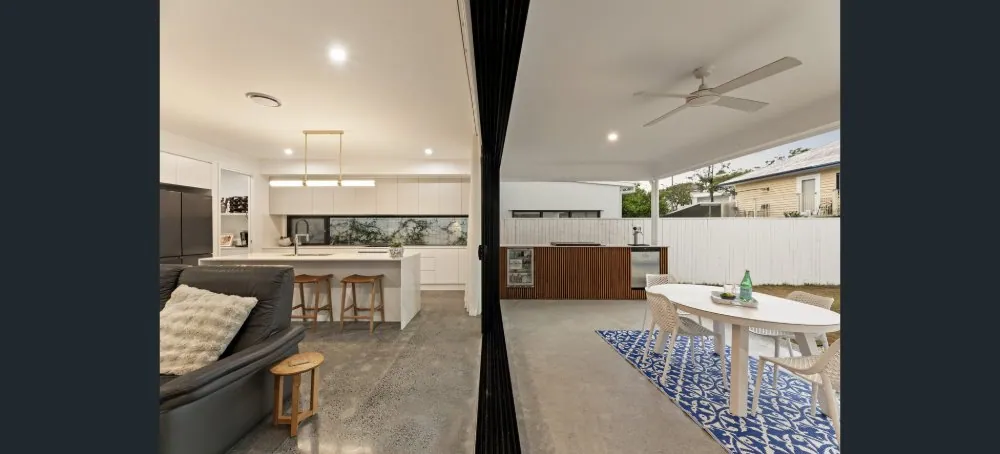
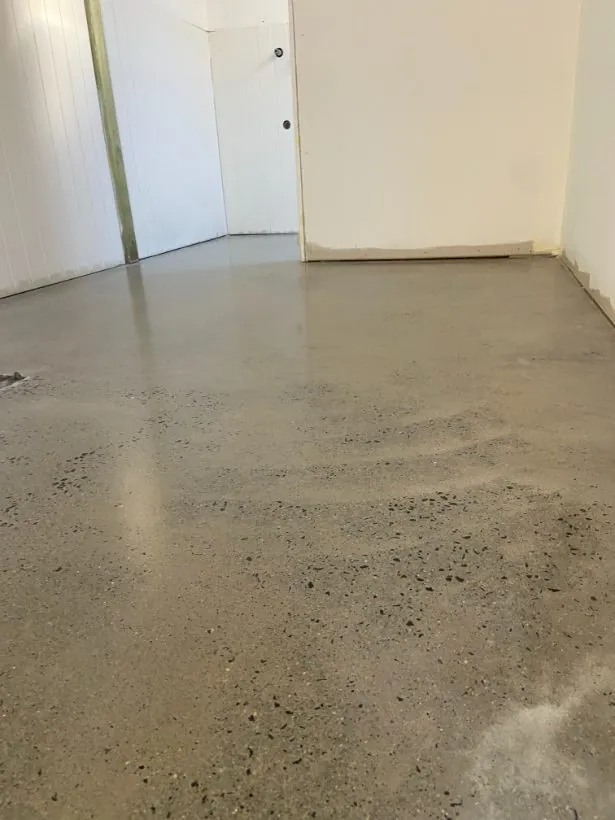
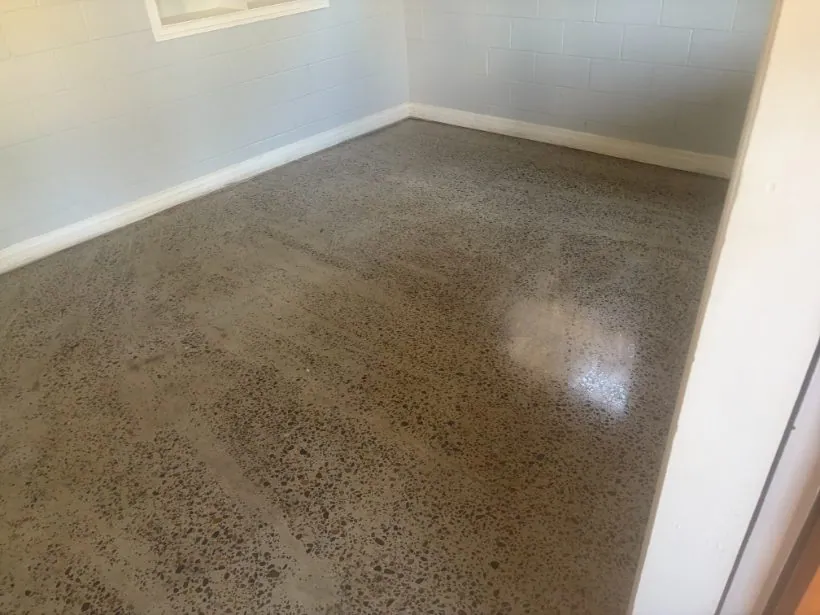
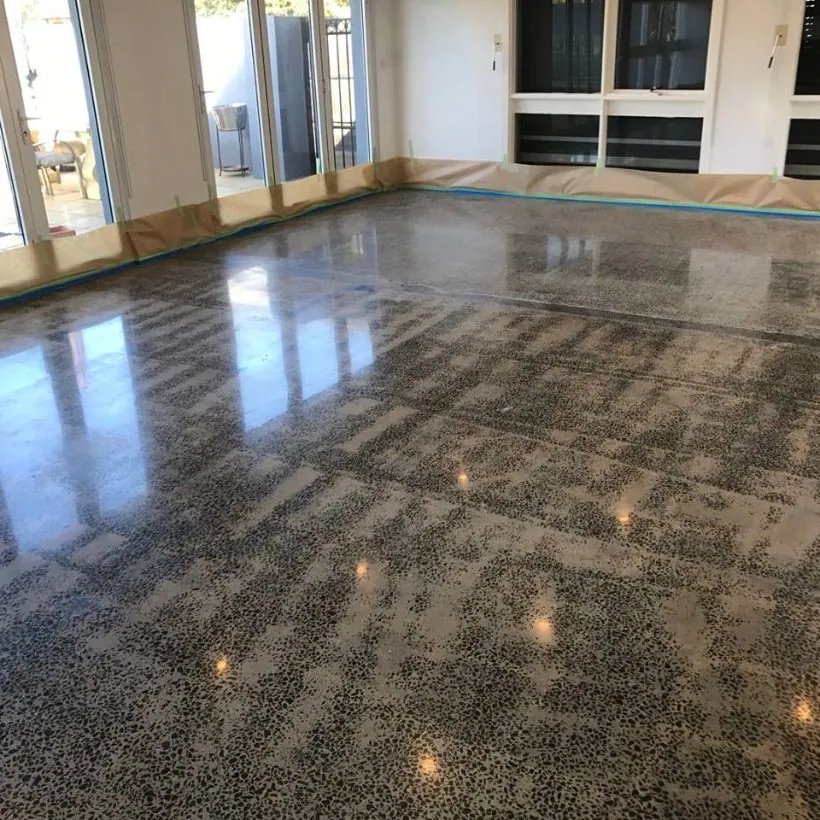
A slab poured and finished to spec is what makes a great floor possible. Here are a few of the results our clients enjoy.